


Rethinking Crew HOTAC and Travel in ACMI Contracts
Why is a model that once worked now holding the industry back?
ACMI has always been about focus. The lessor focuses on aircraft, crew, maintenance, and insurance. The lessee focuses on network, sales, and operations. Over time, this division of responsibility has been translated into contract structures that feel almost immutable, including how crew HOTAC (hotel accommodation) and crew travel are handled.
Traditionally, ACMI contracts place the responsibility for booking and paying crew hotels and travel on the lessee airline. On paper, this makes sense: the lessee controls the operation, the schedule, and the stations. In practice, however, this model increasingly creates friction, inefficiency, and unnecessary cost for both parties.
It is time to challenge whether this approach is still fit for purpose.
The hidden cost of the traditional model
In the classical setup, the process typically looks like this:
- The lessor operates the aircraft and manages the crew.
- The lessee is contractually responsible for arranging and paying for crew hotels and, in many cases, crew transport.
- The lessor’s crew travel or crew planning team still needs to:
– Verify hotels meet company and regulatory requirements
– Track crew movements and rest
– React to schedule changes, delays, or aircraft swaps
This inevitably leads to double work.
While the lessee books the hotel, the lessor must still plan, monitor, adjust, and often re-plan crew accommodation and travel. Two organizations touch the same process, using different systems, timelines, and priorities.
The result?
- Duplicate effort across two crew travel departments
- Increased email traffic, phone calls, and manual follow-ups
- Higher risk of misalignment between booking reality and operational reality
And this is before disruption enters the picture.
When reality moves faster than contracts
Operational reality has changed – but contract structures often have not.
In today’s environment, schedules are fluid. Aircraft swaps happen late. Rotations change with short notice. Crew legality, fatigue management, and hotel availability must be handled in near real time.
Yet under the traditional ACMI model, a common scenario looks like this:
- The lessor updates a rotation due to operational necessity
- The crew planning system reflects the new reality immediately
- The lessee has not yet processed the hotel booking – or is waiting for confirmation from the hotel
In some cases, by the time the lessee receives confirmation, the reality has already changed again.
This creates:
- Last-minute rebookings
- Cancellation fees
- Crews arriving without confirmed accommodation
- Stress for operations teams on both sides
Ironically, the party that has the least direct control over the crew is often the one expected to react fastest.
A modern alternative: budgets instead of bookings
There is a more efficient way forward.
Instead of the lessee booking and paying for crew, HOTAC, and travel directly, the lessee can grant the lessor a defined budget for these services.
Under this model:
- The lessee retains cost control through agreed budgets, caps, and reporting
- The lessor gains operational control over bookings that directly affect crew duty, rest, and legality
- Responsibility and accountability finally align with reality
This small contractual shift unlocks significant operational benefits.

Automation thrives where ownership is clear
When the lessor controls the booking process within an agreed budget, automation becomes possible.
Crew planning systems, travel automation platforms, and hotel content can be integrated directly into operational workflows:
- Hotels are booked automatically based on duty changes
- Crew legality and rest rules are enforced by design
- Changes trigger rebooking without emails or manual intervention
- Full audit trails and cost reporting remain available to the lessee
Most importantly, manual handovers disappear.
No more waiting for confirmations. No more reconciling mismatched data. No more double-checking whether “the hotel is really booked.”
Saving money by removing friction
At first glance, shifting booking responsibility to the lessor may sound like an added cost or loss of control for the lessee. In reality, the opposite is often true.
Cost savings come from:
- Fewer cancellations and no-show fees
- Better alignment between actual crew movements and bookings
- Reduced manual workload across both organisations
- Access to negotiated hotel rates and optimised content
When processes are automated and owned by the party closest to the operation, efficiency follows naturally.
Both lessor and lessee benefit.
Creating space for specialist solutions
This modern approach also opens the door for specialist, outsourced solutions.
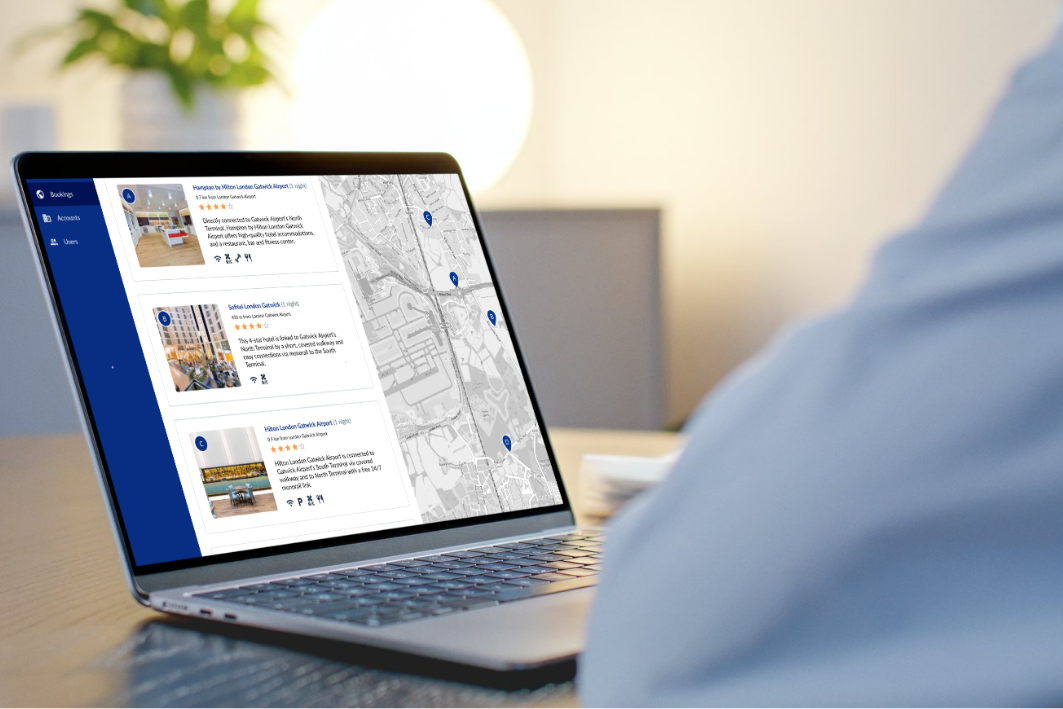
Platforms like Get-e exist precisely to handle complex crew travel and HOTAC workflows at scale – integrating with crew planning systems, automating bookings, managing changes, and providing transparency to all stakeholders.
These solutions only reach their full potential when:
- Ownership is clear
- Budgets are defined
- Processes are designed for automation rather than manual coordination
In other words, when contracts evolve to reflect how operations actually work today.
It’s time to evolve the ACMI playbook
ACMI has always been about flexibility and efficiency. Yet in crew HOTAC and travel, many contracts still reflect a world of static schedules and manual processes.
By replacing booking obligations with budget responsibility, the industry can:
- Reduce friction
- Improve operational resilience
- Lower total cost
- Enable modern, automated solutions
The question is no longer whether this model works — but how long we can afford to keep working around one that no longer does.
The future of ACMI crew travel is not more emails, more coordination, or more exceptions.
It is clarity, automation, and trust — built into the contract itself.

Written by Karl-Oskar Tollsten – Account Director at Get-e